Roof Leaks Don't Stay in the Attic: How Water Damage Spreads Through a Coral Springs Home
Where the water really goes after it slips past your shingles — and why the first stain you see is already an old problem.
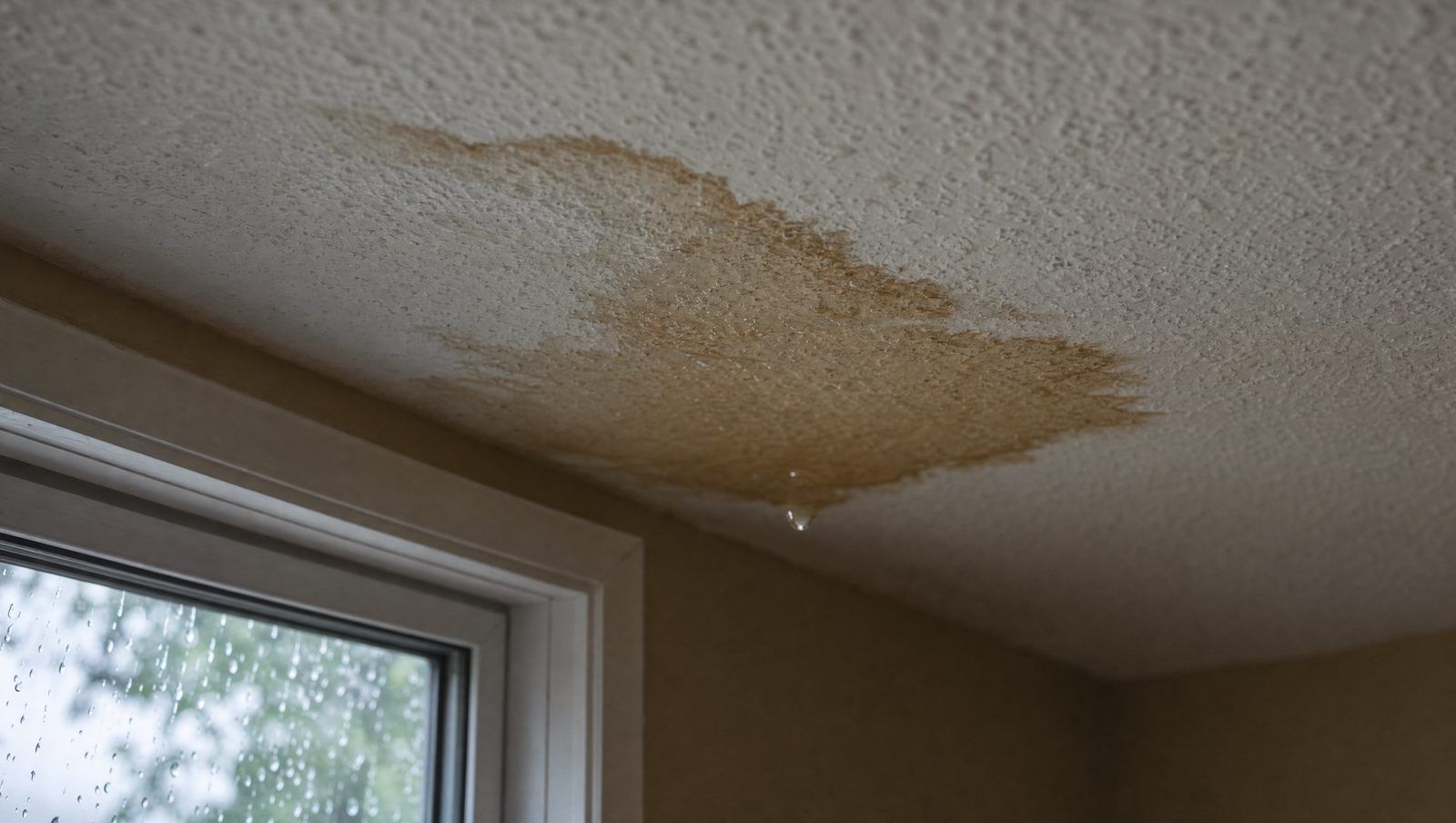
By the time a brown ring shows up on a Coral Springs ceiling, the roof leak that caused it is usually weeks old. Water is patient: it finds a gap at a piece of flashing or a cracked shingle, and then it takes the long way down through your house.
Understanding that path is the difference between a small repair and a gutted hallway. Here is where the water actually goes after it gets past the roof, and why speed matters more than most homeowners realize.
The Stain on the Ceiling Is the Last Stop, Not the First
Rain almost never drips straight down into a room. It slips in at a vent boot, a valley, or a lifted shingle, then runs along the underside of the roof decking until it finds a rafter to follow.
That is why the stain often shows up nowhere near the actual breach. A leak over the garage can stain a bedroom ceiling ten feet away, and patching the drywall under the stain does nothing about the hole that fed it.
Where the Water Goes Before You Ever See It
The first thing a slow leak soaks is attic insulation, and insulation never complains. It just compresses, loses its R-value, and holds moisture against the back of your ceiling drywall like a wet sponge.
From there, water follows gravity into top plates and wall cavities. Weeks later you get the symptoms that look unrelated: bubbling paint partway down a wall, a warped baseboard, a musty smell in a closet that was never wet to the touch.
The 48-Hour Clock That Starts the Moment Water Gets In
Mold does not wait for the insurance adjuster. Give damp drywall, wood, or insulation roughly 24 to 48 hours and spores start colonizing, which turns a drying problem into a remediation problem.
That clock is a rule restoration crews live by everywhere, not just in Florida. Companies handling water damage restoration in San Antonio pull soaked insulation out of Texas attics after every big storm season for exactly the same reason: the hole in the roof was small, but the delay was not.
So the real job after a leak is only half about stopping the water. The other half is drying out everything it touched before the clock runs out.
Why Storm Season Turns Small Leaks Into Big Ones
A South Florida summer storm does not drop rain politely from above. It drives it sideways, under lifted shingle edges and into flashing joints that shed vertical rain just fine.
Worse, storms come in runs here. A roof that takes on a little water on Tuesday gets hit again Thursday before anything has dried, and three small soakings behave exactly like one big one.
What to Do the Day You Spot a Stain
Photograph the stain and trace its edge lightly with a pencil, with the date. If the line grows after the next rain, the leak is active and you have evidence for both the roofer and any insurance conversation.
Then get two things moving at once: a roofer to find and close the entry point, and a proper dry-out of the attic and any wet cavities. Painting over the stain with blocker is the one move to avoid, because it hides the only warning light you have.
A leak caught at the stain stage is still a cheap problem. The expensive version is the same leak six months later, and the only difference between the two is how fast you moved.